 By Admin
Welcome to Tribupneu, your premier destination for everything related to tire technology, industry trends, and smart mobility. Tires are no longer just rubber rings connecting vehicles to the road; they are now sophisticated components influencing safety, energy efficiency, handling, and environmental impact. As electric, autonomous, and connected vehicles become more prevalent, understanding tire innovations has never been more important.Whether you are a consumer, fleet manager, engineer, or enthusiast, Tribupneu provides insights into the latest trends, technologies, and sustainable practices shaping the tire industry.
Why Tire Innovation Is Critical Today
1. Shift to Electric and Autonomous Vehicles (EVs & AVs)
- Electric Vehicles (EVs): EVs place higher stress on tires due to their weight and torque, making low rolling resistance and durability critical for efficiency and safety.
- Autonomous Vehicles (AVs): Self-driving cars require highly reliable tires to maintain safety, which is driving the development of airless and run-flat tire technologies.
- Connected Vehicles: Smart tires with embedded sensors provide real-time data on pressure, temperature, and wear, improving stability, predictive maintenance, and overall safety.
2. Sustainability and Circular Economy
The tire industry is adopting eco-friendly practices to reduce environmental impact. Manufacturers are focusing on green chemistry, renewable materials, and advanced recycling techniques. Pyrolysis and devulcanization allow old tires to be converted into raw materials for new ones, and bio-based rubber from plants is becoming more widely used.
3. Digitalization & Predictive Maintenance
Digitalization enables real-time monitoring and predictive analytics for tire performance:
- Digital twins simulate tire behavior over time to optimize lifespan and safety.
- AI-driven designs accelerate R&D, optimizing tread patterns for performance.
- Fleet management systems can use sensor data to minimize downtime and reduce costs.
Key Innovations in the Tire Industry
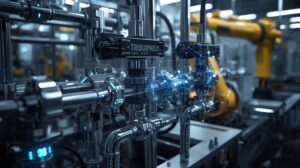
Smart Tires with Sensors
Definition:
Smart tires include microelectronics that monitor pressure, temperature, strain, and tread depth in real time.
Benefits:
- Safety: Early detection of under-inflation or overheating.
- Predictive Maintenance: Enables proactive tire replacement.
- Vehicle Performance: Sensor data can optimize ABS, stability control, and route planning.
Examples:
- Tires that detect road friction to improve braking.
- Fleet tires that send real-time condition data for predictive maintenance.
Airless and Run-Flat Tires
Definition:
- Airless tires use internal structures instead of air for support.
- Run-flat tires allow continued driving after a puncture.
Benefits:
- Reduced Maintenance: Eliminates blowouts and under-inflation issues.
- Safety: Ensures reliability in autonomous or high-speed vehicles.
- Cost Savings: Minimizes downtime and labor costs for fleets.
Industry Trends:
Prototypes from major manufacturers show growing viability for airless designs, while run-flat and self-healing tires are gaining traction.
Sustainable & Eco-Friendly Materials
Types of Materials:
- Bio-based rubber from plants.
- Recycled rubber and carbon black.
- Alternative fillers like silica from rice husks or plant oils.
Benefits:
- Reduces carbon footprint and environmental impact.
- Complies with stricter global regulations.
- Appeals to eco-conscious consumers and fleet operators.
Industry Examples:
- Tires using up to 70% sustainable materials.
- Green oils and recycled fibers for improved efficiency and grip.
AI, Digital Twins, and Predictive Modeling
Definition:
- Digital twins: Virtual models of tires to predict wear and maintenance needs.
- AI-driven design: Optimizes tread patterns and performance.
Benefits:
- Reduces R&D costs through virtual testing.
- Improves reliability by identifying issues early.
- Optimizes tire performance across multiple parameters.
Applications:
- Virtual tire simulations for fleet management.
- AI-optimized tread patterns for EVs and high-performance vehicles.
Market Trends & Business Impact
| Trend | Description | Business Impact |
| Smart Tires / Sensor Integration | Embedded electronics monitor tire metrics | Enables predictive maintenance, reduces downtime, improves safety |
| Airless / Run-Flat Tires | Tires that continue operating after damage | Lower maintenance cost; higher reliability for fleets and EVs |
| Sustainable Materials | Bio-rubber, recycled rubber, plant-based oils | Meets ESG goals, reduces environmental footprint, appeals to eco-conscious buyers |
| Digital Twins & AI Design | Virtual modeling and AI-generated tread patterns | Faster R&D, cost saving, better-performing tires |
| Connected Mobility | Tire data integrated into vehicle systems | Supports smart fleet management, autonomous systems, predictive insights |
Challenges & Considerations
- Cost Barriers: Advanced designs and materials increase production costs.
- Sensor Durability: Electronics must withstand constant deformation.
- Recycling Complexity: Devulcanization and pyrolysis are not universally cost-effective.
- Regulatory Landscape: Tire emissions and safety regulations are evolving.
- Adoption Lag: Consumers and fleets may hesitate to adopt new technologies.
Why Tribupneu Is Important
Tribupneu serves as a knowledge hub for tire technology, offering:
- Insightful Analysis: Simplifying complex tire trends for practical understanding.
- Decision Support: Helping consumers and businesses choose the right tires.
- Future Forecasting: Monitoring innovations, regulations, and industry trends.
- Sustainability Focus: Highlighting green initiatives and materials.
Frequently Asked Questions (FAQ)

Q1: What does tribupneu mean?
It represents a platform where tire innovation meets community discussion and insights combining “tribune” (platform) with “pneu” (tires).
Q2: Why aren’t airless tires mainstream?
Technical and economic barriers, including high manufacturing costs and durability validation, prevent widespread adoption.
Q3: How do smart tires improve safety?
They monitor real-time conditions like pressure, temperature, and tread wear, feeding data to control systems to prevent accidents.
Q4: Are eco-friendly tires durable?
Modern eco-friendly tires are competitive in performance, combining bio-based materials with recycled components for long-lasting durability.
Q5: What is a digital twin?
A virtual replica of a tire that predicts wear and maintenance needs, helping optimize cost, safety, and lifespan.
Q6: Will advanced tires increase costs?
Initially yes, but predictive maintenance and improved lifespan can offset the investment over time.
Q7: How can I stay updated on tribupneu topics?
By following publications, newsletters, and forums focused on tire innovation, technology, and sustainability trends.
Conclusion
Tires are evolving from simple rubber rings into intelligent, data-driven, and sustainable components. Tribupneu provides deep insights into these transformations, covering smart sensors, airless designs, eco-friendly materials, and AI-driven innovations.